Timeline Item 1
Who
We Are
Babylon Group has crafted the notion of diversity and sustainable approach in the industry. Technology is at our forefront with sustainability curating the collaboration in the persistent quest of innovation. We have nurtured alliances with major global brands and partners that have shared a mutual vision that altered the course of the apparel industry. We ensure that our group of companies is at the forefront of revolutionizing the essence of the RMG sector.
Beyond its core business concentration of Ready-Made Garments, consisting of 18 multifaceted companies with over 14,000 hardworking employees. Babylon Group has footprints in a diversified sector besides RMG such as agriculture, information technology and one-stop solution in apparel backward linkage, among others.
Our Story
A legacy of 40 years in the RMG Sector of Bangladesh.
In 1986, Babylon Group plunged into the fastest growing market of Readymade Garments (RMG) as a minimal establishment in a leased manufacturing building. Entrepreneurs’ perceptions and work diligence evolved through time, eventually leading to the modest establishment morphing into a number of companies. Thus, growing into one of the nation’s consequential compliant RMG manufacturing entities.
After a rigorous 40-year run, Babylon Group remains a conglomerate of 18 firms and a family of over 14,000 happy employees, thus fostering a worker-friendly culture in its operations. Aside from strong strategic competence in RMG, Babylon Group is also working in a diverse range of agricultural and technology industries. Ensuring collaborative excellence to reach beyond organizational goals.
Strength
Strengths Driven With Purpose of Creating Excellence

Timeline Item 1

Timeline Item 2

Timeline Item 3

Timeline Item 4
We generate energy from solar panels, resulting in a cleaner environment and a more sustainable method of manufacture. Furthermore, it emits no greenhouse gasses after installation, minimizing our reliance on foreign oil and fossil fuels.
Board of
Directors
Transformation Journey
At Babylon Group, we are committed to being a leader in the Bangladesh garment industry through good organizational practices, modern approaches, and strategic diversification. With a history of 40 years, we have faced challenges and achieved successes. Our goal is to continue to grow as a global leader in upholding the “Made in Bangladesh” brand. However, we recognize that the future is increasingly competitive and technology-driven, and that staying competitive requires an inclusive transformation of our governance framework and human capital. To achieve this, we have initiated a transformation project in collaboration with experts, to review our organizational structure, build a performance-oriented culture, and develop leaders capable of meeting the needs of our organization and the industry. Join us on this exciting journey towards a sustainable development.
Condensed Steam
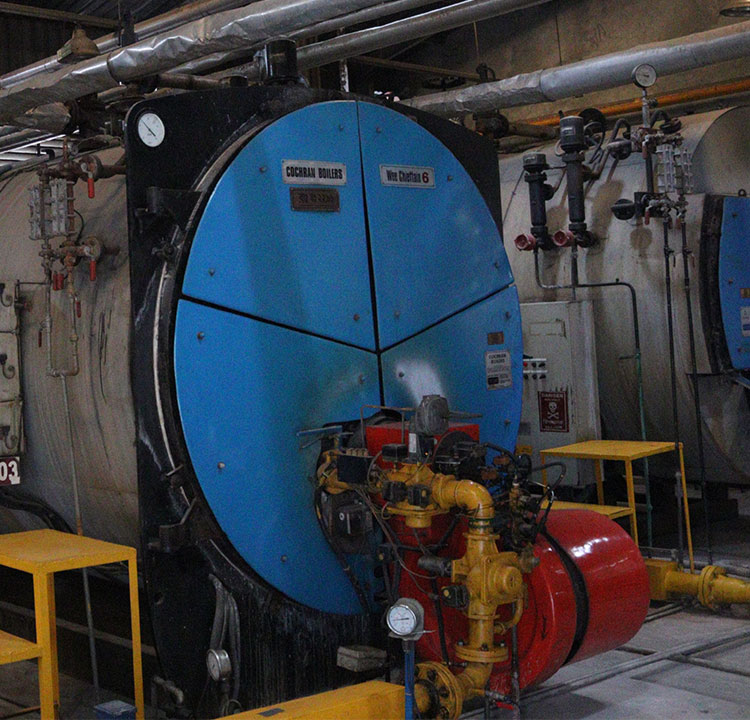
At Babylon Group, we are committed to implementing sustainable practices throughout our operations. One of the initiatives we have implemented is our condensed steam recovery process. This process involves recovering the condensed steam produced by our dyeing machines and redirecting it to our boiler feed. This not only helps to save energy, but it also significantly reduces the amount of gasses emitted into the atmosphere. In fact, our condensed steam recovery process saves an impressive 4.9 cubic meters of gasses per minute.
Exhaust Gas Boiler (EGB)
Installing an Exhaust Gas Boiler (EGB), we are able to reuse the waste thermal energy from the generator exhaust line and produce steam. This not only helps us to save energy, but it also significantly reduces the amount of greenhouse gasses emitted into the atmosphere. In fact, our waste heat recovery system saves an impressive 28445 cubic meters of gas per month and reduces 54 tons of greenhouse gas emissions. We are working to minimize our environmental impact and promote sustainable practices within our industry. With the installation of EGB, we are not only saving energy, but also conserving natural resources, and reducing our carbon footprint.
Roadmap to Renewable Energy
Solar Solutions for a Sustainable Future
We have installed a solar panel with a capacity of 37 kW as a pilot project, and we are planning to engage more solar panels in all of our business units. We have identified a potential of more than 2MWp solar on the rooftop of Aboni Textiles & Knitting Unit. This approach not only helps to save on gas consumption, but it also significantly reduces our CO2 emissions. Additionally, the use of solar energy results in a much lower levelized cost of electricity compared to grid electricity. We are constantly looking for ways to improve our sustainability efforts, and the use of solar energy is just one example of how we are working to minimize our environmental impact and promote sustainable practices within our industry.
Solar Energy
Brighter Tomorrow with Solar Power
We generate energy from solar panels, resulting in a cleaner environment and a more sustainable method of manufacture. Furthermore, it emits no greenhouse gasses after installation, minimizing our reliance on foreign oil and fossil fuels.
Chemical Management
Manufacturing Made Sustainably
We are devoted to maintaining our product integrity standards, and we ensure that our products conform with rules governing the use of hazardous substances. By limiting the concentration of certain chemical substances in our raw materials and finished goods we periodically monitor to ensure that no dangerous compounds are discharged.
Energy Saving Initiatives
Insulation of Dyeing Vessels
Another sustainability initiative we have implemented is the insulation of our dyeing vessels. By insulating these vessels, we are able to keep the water inside at 37 degrees of higher temperature, which means that we require less energy to heat the water. This not only helps to save energy, but it also increases the temperature efficiency of our dyeing machines. Before insulation, the machines would lose heat and take longer to reach the desired temperature. This not only slowed down the dyeing process, but also made the ambient temperature of the dyeing floor uncomfortably hot. Now, with the insulation in place, the machines heat up quickly and the ambient temperature is much more tolerable.
Condensed Steam
At Babylon Group, we are committed to implementing sustainable practices throughout our operations. One of the initiatives we have implemented is our condensed steam recovery process. This process involves recovering the condensed steam produced by our dyeing machines and redirecting it to our boiler feed. This not only helps to save energy, but it also significantly reduces the amount of gasses emitted into the atmosphere. In fact, our condensed steam recovery process saves an impressive 4.9 cubic meters of gasses per minute.
Exhaust Gas Boiler (EGB)
Installing an Exhaust Gas Boiler (EGB), we are able to reuse the waste thermal energy from the generator exhaust line and produce steam. This not only helps us to save energy, but it also significantly reduces the amount of greenhouse gasses emitted into the atmosphere. In fact, our waste heat recovery system saves an impressive 28445 cubic meters of gas per month and reduces 54 tons of greenhouse gas emissions. We are working to minimize our environmental impact and promote sustainable practices within our industry. With the installation of EGB, we are not only saving energy, but also conserving natural resources, and reducing our carbon footprint.
Roadmap to Renewable Energy
Solar Solutions for a Sustainable Future
We have installed a solar panel with a capacity of 37 kW as a pilot project, and we are planning to engage more solar panels in all of our business units. We have identified a potential of more than 2MWp solar on the rooftop of Aboni Textiles & Knitting Unit. This approach not only helps to save on gas consumption, but it also significantly reduces our CO2 emissions. Additionally, the use of solar energy results in a much lower levelized cost of electricity compared to grid electricity. We are constantly looking for ways to improve our sustainability efforts, and the use of solar energy is just one example of how we are working to minimize our environmental impact and promote sustainable practices within our industry.